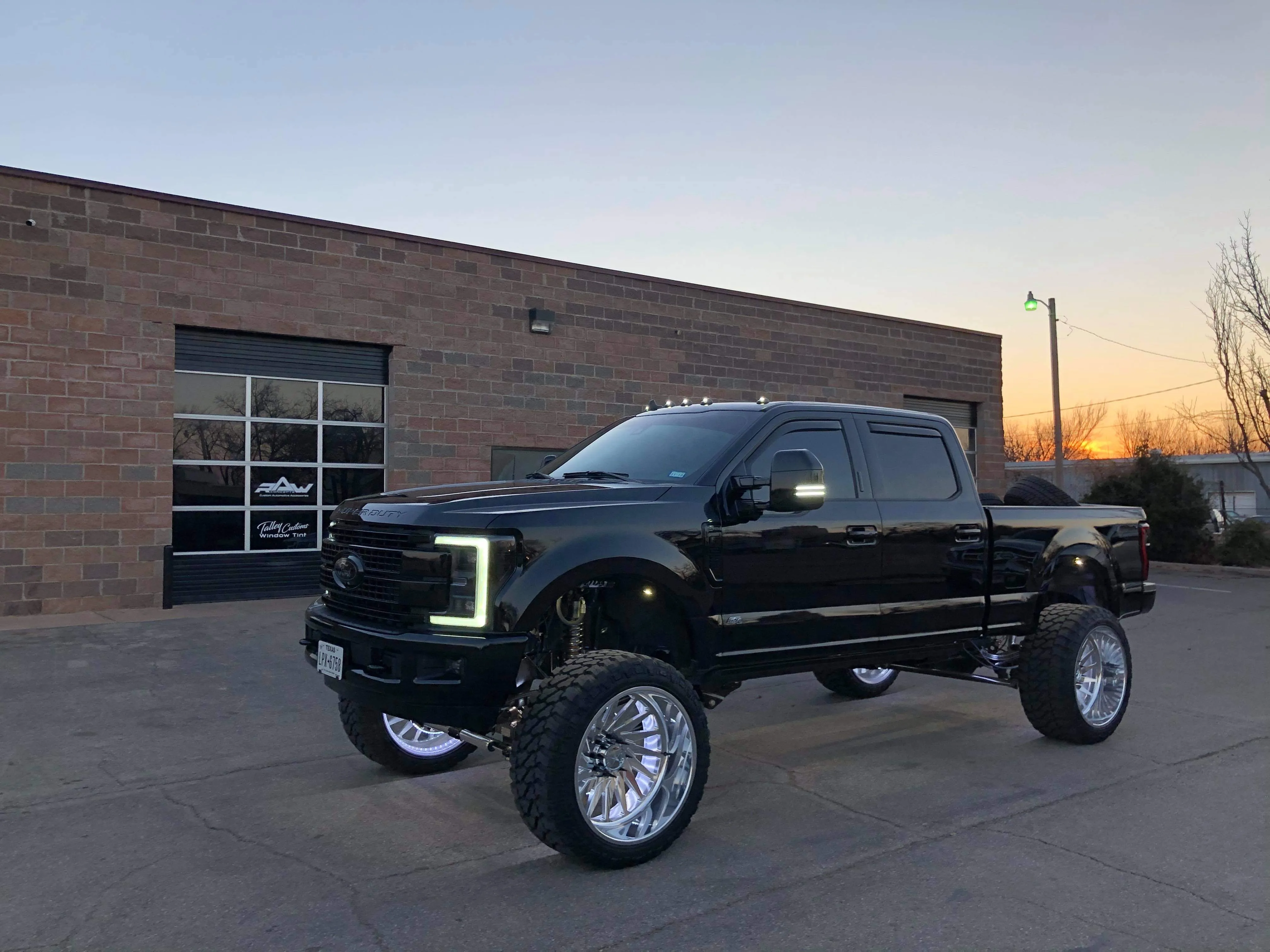
This is probably the question we get asked more than any other. Someone rolls up with a stock F-150 or a Silverado and says "I want it lifted." When we ask what they mean by lifted, half the time they are actually describing a leveled truck. The other half want the real deal.
Neither is wrong. But they are very different things, and building the wrong one for your situation is a frustrating and expensive mistake.
What a Leveling Kit Actually Does
Most pickup trucks come from the factory with the front end sitting lower than the rear. This is intentional. It is designed so that when you load up the bed or hook up a trailer, the truck levels out. Without that built-in rake, a loaded truck would be nose-high and tail-dragging, which is a handling nightmare.
A leveling kit closes that gap. It raises the front of the truck to match the rear, which eliminates the raked stance and gives you a much cleaner look. Depending on the truck, that is typically 1.5 to 3 inches of front lift.
What You Get With a Level
The immediate visual difference is real. A leveled truck looks intentional instead of stock. It also opens the door for slightly larger tires, usually up to about 33 or 34 inches on most platforms, without needing to do any rubbing fixes or major modifications.
Cost is lower. Installation is usually a day or less. And if you still use your truck for work and need that towing and payload capacity to stay intact, a leveling kit does not mess with any of that.
Leveling Kit
- 1.5 to 3 inches of front lift
- Cleans up the factory rake
- Fits up to 33 to 34 inch tires on most trucks
- Towing and payload stay intact
- Lower cost, faster install
- Great for daily drivers and work trucks
Lift Kit
- 3 inches and up, sometimes 10 or more
- Raises the entire truck front and rear
- Fits 35 inch tires and beyond
- More ground clearance for off-road
- Higher cost, more involved install
- Better for builds, show trucks, off-road rigs
What a Lift Kit Actually Does
A lift kit raises the entire truck, both front and rear. Depending on the kit and the platform, you are looking at anywhere from 3 inches all the way up to 10, 12, even 14 inches on some builds we have done.
This is where the truck starts to look like a completely different vehicle. You get significantly more ground clearance, the ability to run much larger tires, and an aggressive stance that a leveling kit just cannot replicate.
The Trade-offs Are Real
A lift kit is more involved. Depending on the height and the kit, you may be looking at longer control arms, new shocks, brake line extensions, driveshaft modifications, and potentially a diff drop. All of that adds up in both parts and labor.
Your center of gravity goes up, which affects handling if you are not running the right tires and alignment setup to compensate. And if you are towing regularly with a heavily lifted truck, that conversation needs to happen upfront so we set it up right.
None of these are reasons not to do it. They are just things to go in knowing.
How We Actually Help You Decide
When someone comes to us, we ask a few things before we ever talk about parts. Do you tow? Do you go off-road? What tire size are you trying to run? Is this a show truck or a driver? What is your budget?
The answers to those questions usually make the decision pretty obvious. A guy who tows a boat every weekend and wants bigger tires and a cleaner look is almost always a leveling kit customer. The guy who wants 37s and a 10-inch stance for car shows and weekend trails is a lift kit customer.
Where it gets more interesting is the middle ground. Guys who want 35s and a solid aggressive look without going full extreme. That conversation usually lands on a 4 to 6 inch lift with a quality kit, properly spec'd for how they actually use the truck.
The Short Version
If you want a cleaner look, slightly bigger tires, and you use your truck for real work or daily driving, start with a leveling kit. It is the right tool for the job and it will not disappoint.
If you want the full transformation, bigger tires, serious stance, and you are building something that turns heads, a lift kit is where you are going. Just make sure whoever builds it knows what they are doing.
We have done both. A lot of both. If you want to talk through what makes sense for your truck, reach out and we will give you a straight answer.