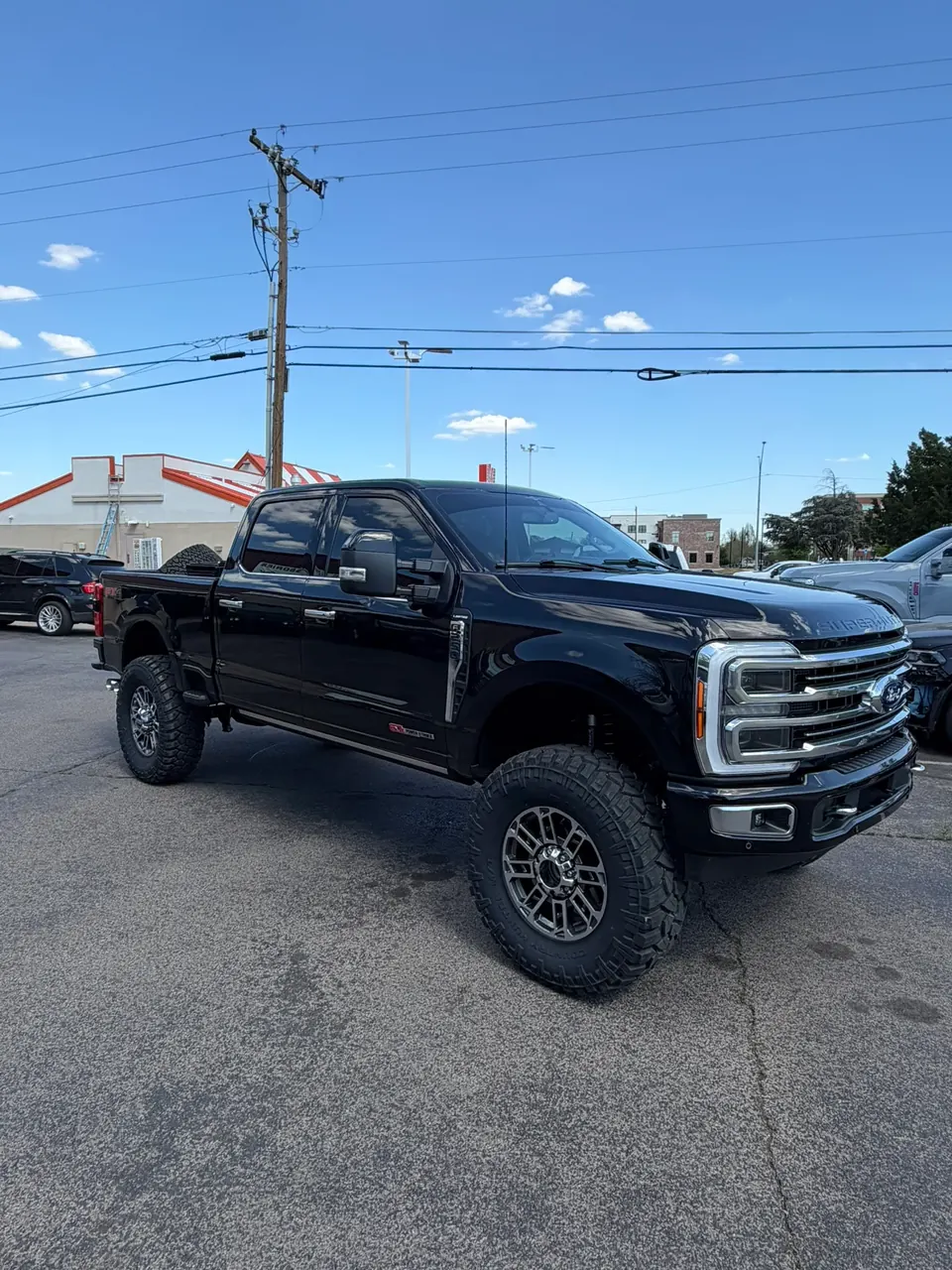
The number one thing customers ask us for is height. The number one thing we end up talking them into is a little less of it. Not because more lift is wrong, but because most people describing a "daily driver" and then asking for a 10-inch kit have not thought through what that truck is going to feel like on the Monday morning drive down I-35.
Here is how we actually think about lift on a truck that gets driven every day.
Start With How You Use It
Before we talk about inches, we ask questions. How many miles a day is the commute? Is it mostly highway, or county roads? Do you tow anything, and how often? Do you park in a garage at work or downtown? Do you want to run bigger tires, and how big?
A person putting on 300 highway miles a week who tows a boat in the summer has almost nothing in common, setup-wise, with someone driving eight miles to an office and back. Same truck, completely different right answer.
The Daily Driver Sweet Spot
For most half-ton and three-quarter-ton trucks that see daily use, the range that keeps everyone happy is a leveling kit up to about 2.5 inches in front, or a matched lift in the 2 to 4 inch range, running 33 to 35 inch tires.
In that window you get the stance and the tire clearance most people are after, and you keep the things that make a truck livable:
What You Keep
Ride quality stays close to stock. Fuel economy barely moves. Tire wear stays predictable if the alignment is done right, and the alignment can actually be done right because you are still inside the factory adjustment range. No fender trimming. No driveshaft work. In most cases, no drivetrain warranty concerns. And you can still get it up on a standard shop lift without drama.
What Changes Past Six Inches
Go higher and the truck stops being a bolt-on and starts being a system. Driveline angles change enough to need a carrier bearing drop or a driveshaft. Steering geometry moves, so you are looking at drop brackets or a track bar to keep it driving straight. The front end wears faster because everything is working at a steeper angle. If you jump to 37s or bigger, you are usually into re-gearing to get the power back, plus heavier-duty wheel bearings, plus tires that cost real money and wear faster.
None of that is a reason not to build a tall truck. We build them all the time. It is a reason to know you are signing up for a build, not an afternoon, and for a truck that asks a little more of you at every oil change.
The Oklahoma Part
A few things about driving here that feed into the decision:
Get east of Edmond and a lot of the county roads turn to gravel and washboard. A couple inches of clearance and a slightly taller sidewall genuinely help, and they help without any of the downsides above. That alone talks a lot of people into a modest lift and a 34 or 35 inch tire.
On the other side of it, if your week is mostly the Kilpatrick and I-35, highway manners matter. A tall truck with a big tire and a light bar catches crosswind and gets tiring on a long drive. Keep the daily sensible and save the aggressive setup for a second truck if you want one.
Downtown OKC parking garages are the sleeper issue. Clearances in a lot of them run right around seven feet. A lifted crew cab with a roof-mounted light bar or an antenna farm will clip the pipes. If you park in one for work, measure before you build.
And winter. We do not get a lot of ice, but when we do, you want a front end that steers exactly how you expect it to, not a lifted setup with worn components and a vague on-center feel. Predictable beats aggressive when the road is slick.
How We Spec a Daily
Once we know how the truck gets used, we pick parts to match. For a straight leveling job we tend to reach for Bilstein or ReadyLift. For a small matched lift where ride quality is the priority, Fox or Cognito. We set tire size to what clears cleanly at that height on your specific platform, not the biggest thing that will physically bolt on.
Every lift gets an alignment afterward, on our rack, and a road test before it goes back to you. If something is not tracking right or the ride is not where it should be, we sort it before you leave.
Come Talk It Through
If you are somewhere between "just a leveling kit" and "send it," bring the truck by. Tell us how you drive it and what you want it to look like, and we will give you a straight recommendation and a real number. No upsell to a build you do not need.