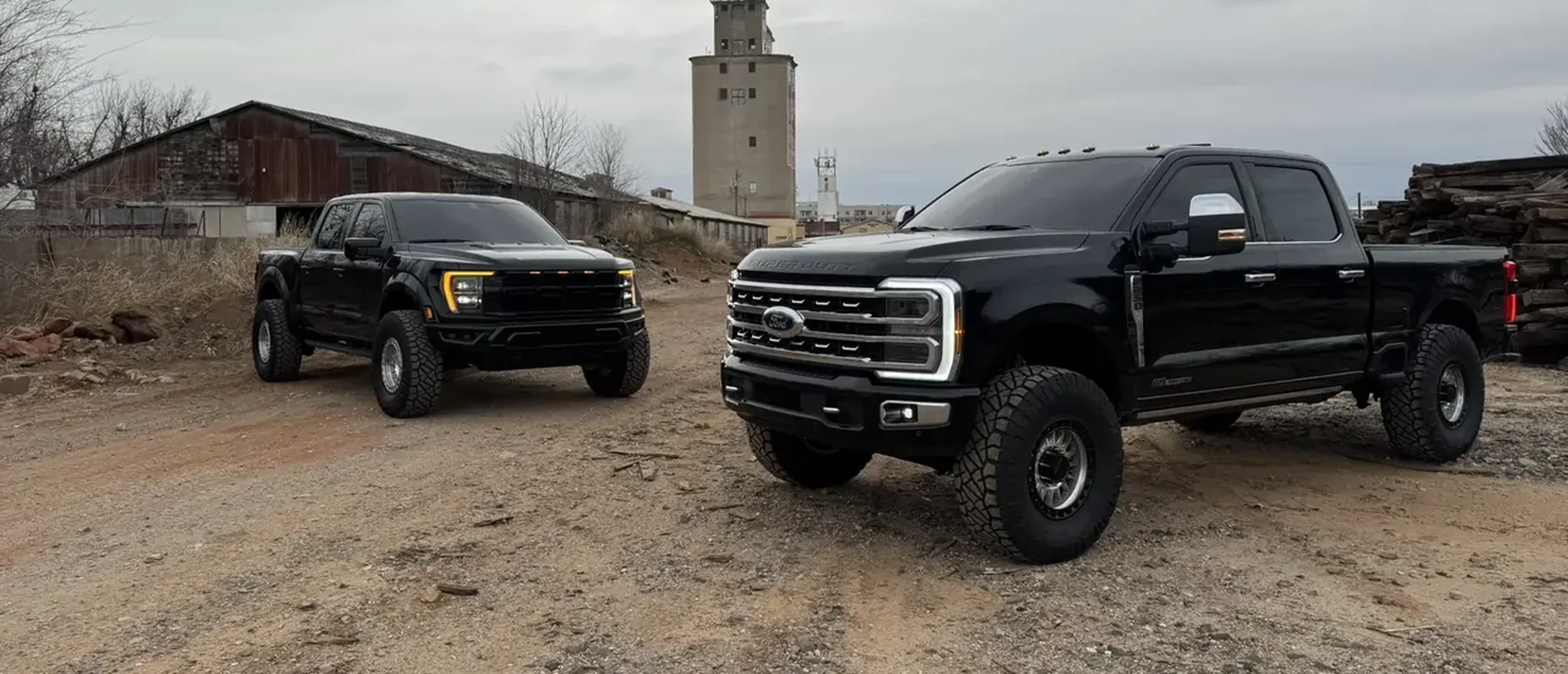
Off-road lighting is one of the most common add-ons we install, and one of the most commonly wired wrong by whoever had the truck before us. Not because it's complicated, but because a light bar taped into a random wire under the dash will technically turn on. It just won't be safe, won't last, and won't be legal to run the way it's set up.
Here's how we actually think about it.
Two Different Jobs
The first question we ask is what the lights are actually for. A truck that sees real trail time at night needs broad, even light out front and clean visibility low around the tires and rocker panels. A truck that's mostly a daily driver with a light bar for the look needs the same clean install, but almost never needs the lights on, on the street.
Both are valid reasons to add lighting. They just change what we recommend and how we wire the switch.
The Street Reality
A forward-facing light bar is built to throw far more light than a headlight. That's the point off-road, where there's no oncoming traffic to blind. On a public road, running auxiliary lights alongside your headlights is a good way to wash out oncoming drivers and draw attention from law enforcement, and it's treated as improper lighting equipment in most places for exactly that reason.
The fix isn't complicated: auxiliary off-road lights get their own dedicated switch, separate from your headlight circuit, so they're only on when you choose to turn them on, off pavement. We wire every light bar and pod set this way by default, whether the truck is a trail rig or a driveway build.
What We Wire Every Light To
A relay and a fused switch panel, not a tap into whatever wire happens to be closest. A dedicated, clearly labeled switch the driver actually controls. Proper grounds and weatherproof connectors, so it's still working correctly a year from now instead of flickering the first time it rains.
Picking the Right Light for the Job
Light bars throw a wide, even flood, good for open trail and general visibility. Ditch lights mount low near the bumper corners and angle outward, filling in the gap a straight light bar misses on a turn. Pods are smaller and more aimable, good for spot lighting a specific area. Rock lights mount under the body and light up low and wide without any glare, which matters both for seeing the trail at night and for how a truck looks sitting still in a parking lot.
Most of what we install comes from Baja Designs, Rigid, KC HiLiTES, or Diode Dynamics, matched to the truck and what it's actually going to be used for. Full breakdown of options is on our off-road lighting page.
The Oklahoma Part
Two things about driving here that matter for this specific build. First, deer season runs through the fall, and a lot of our customers are out on rural roads at dawn or dusk when deer move. A good set of auxiliary lights, used correctly off the main highway, genuinely helps you see something step out before your headlights would. Second, if you spend any time on the gravel and washboard roads east of Edmond at night, wide, even light matters more out there than it does on a lit city street.
How We Install It
Every light bar, pod set, or rock light kit we put on gets its own relay-protected circuit, a labeled switch, and connectors sealed against weather. We route the wiring somewhere it won't get pinched, chafed, or cooked against the exhaust, and we test everything before the truck leaves the shop. Clean now means it's still clean in three years.
Bring It By
Whether you want a full light bar and rock light setup for real trail use or just a clean, correctly wired look for the driveway, bring the truck in and tell us what you're actually going to do with it. We'll spec the lights and the wiring to match.