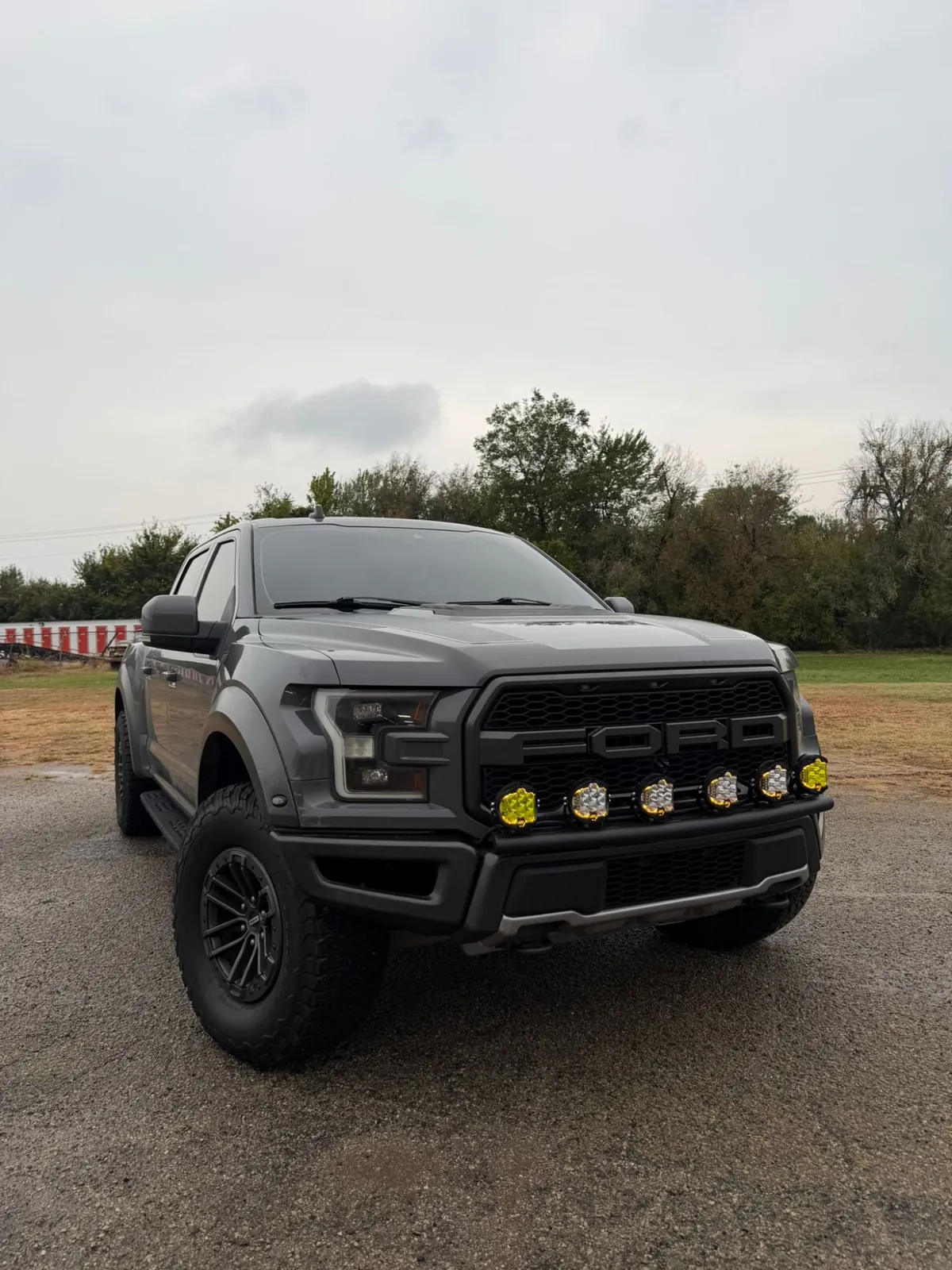
Factory headlights are built to a budget and a rulebook. They light the lane in front of you and not much else. The ditch, the deer standing on the shoulder, the turn on a dirt road, the far side of a dark lease gate: that is what good auxiliary lighting is for.
Most people shop lights by price or by the biggest lumen number on the box. Both are the wrong place to start. What matters is the color of the light, the shape of the beam, where it is mounted, and how it is wired.
Amber vs White: It Is About Your Eyes
Light is made of different colors, and each color travels in a different size wave. Blue and white light have short waves. Amber and yellow light have longer waves.
Short waves bounce off tiny things in the air: fog, rain, dust and snow. When a white light hits fog, a lot of that light scatters right back at your windshield. That glowing white wall you have driven into on a foggy night is your own light coming back at you.
Longer amber waves punch through that same air with less bounce back. Less glare means your eyes can actually see the road. Amber is also easier on your eyes over a long night, which is why so many guys who drive dirt roads, hunt, or run the highway before sunrise swear by it.
White light has its place. On a clear night, white shows more detail and true color. You can tell a branch from a shadow and a reflector from a deer's eyes from farther away. White is the brighter-feeling light.
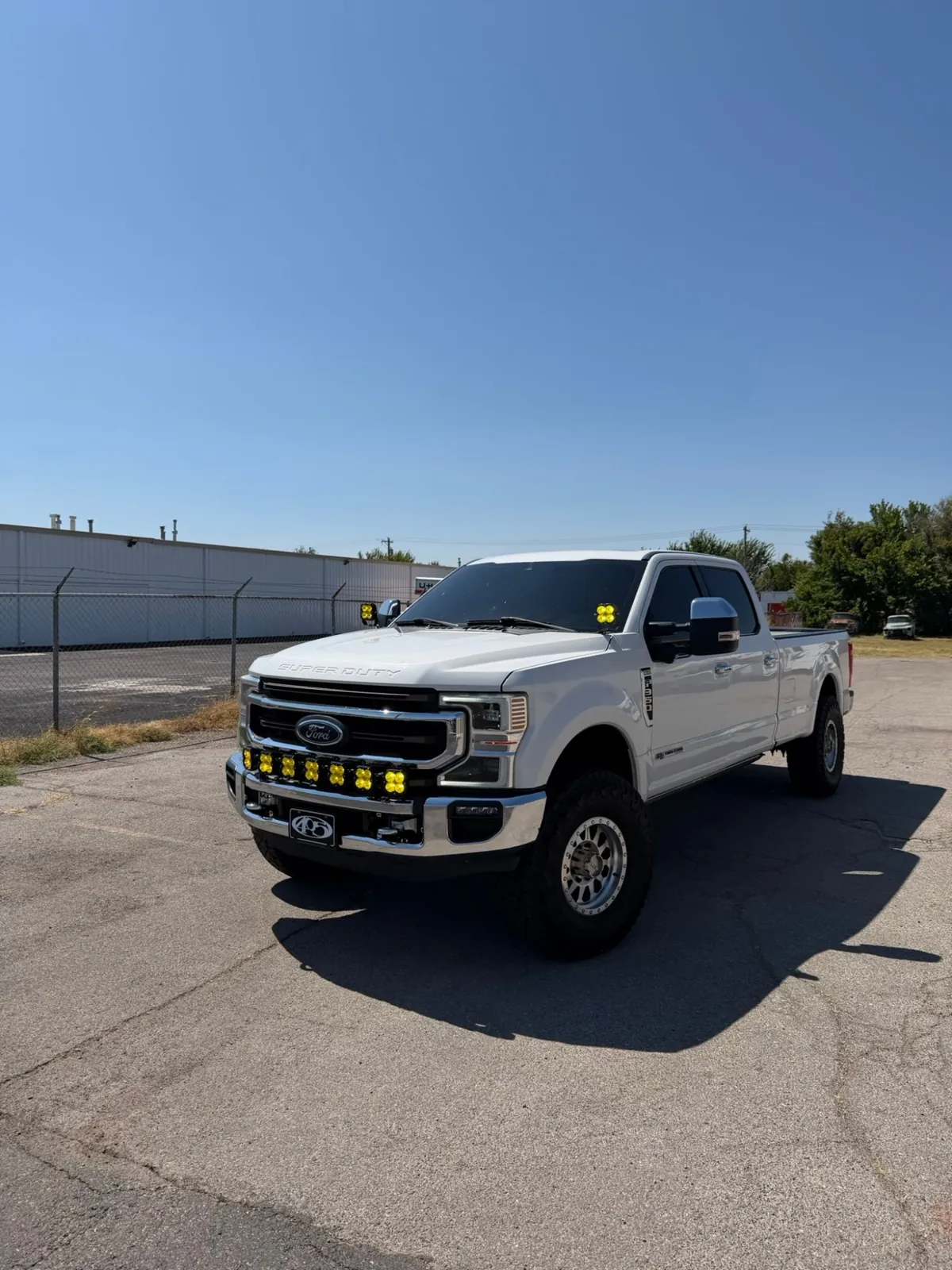
This F-350 runs a full row of amber cubes in the bumper plus amber ditch lights on the A-pillars. Low and wide in front for dust and rain, and light off to the sides for the edges of the road.
A quick word on Kelvin
You will see white lights rated in Kelvin, like 5000K or 6000K. That number is the color of the white. Lower numbers look warmer and more yellow. Higher numbers look cooler and more blue. Old halogen bulbs sit around 3000K. Most good LED off-road lights sit in the mid 5000s, close to daylight. Go too blue and you get more glare and less real detail.
Spot vs Flood vs Fog: The Shape of the Beam
Every LED light has a lens or reflector in front of it called the optic. The optic decides where the light goes. Two lights with the exact same LEDs can do completely different jobs depending on the optic.
Spot
A narrow, tight beam that throws light far down the road or trail. Great for seeing what is coming at highway speed or across a field. Not much help right in front of the bumper or around a corner.
Flood
A wide beam that spreads light close and to the sides. Perfect for slow trails, work sites, and backing a trailer at night. Does not reach far.
Driving or combo
A blend of both. Many light bars mix spot and flood optics in one housing so you get reach in the middle and spread on the edges.
Fog
A very wide, flat beam with a hard cutoff on top. Fog lights mount low and keep their light under the fog instead of lighting it up in front of your eyes. Pair that flat pattern with amber and you have the best tool there is for bad weather.
Lumens are not the whole story
Lumens tell you how much light the LEDs make in total. They do not tell you how much of it lands where you need it. A well-built light with good optics puts its light on the road. A cheap light with a big lumen number sprays it everywhere, including back into your eyes. Beam pattern beats lumen count every time.
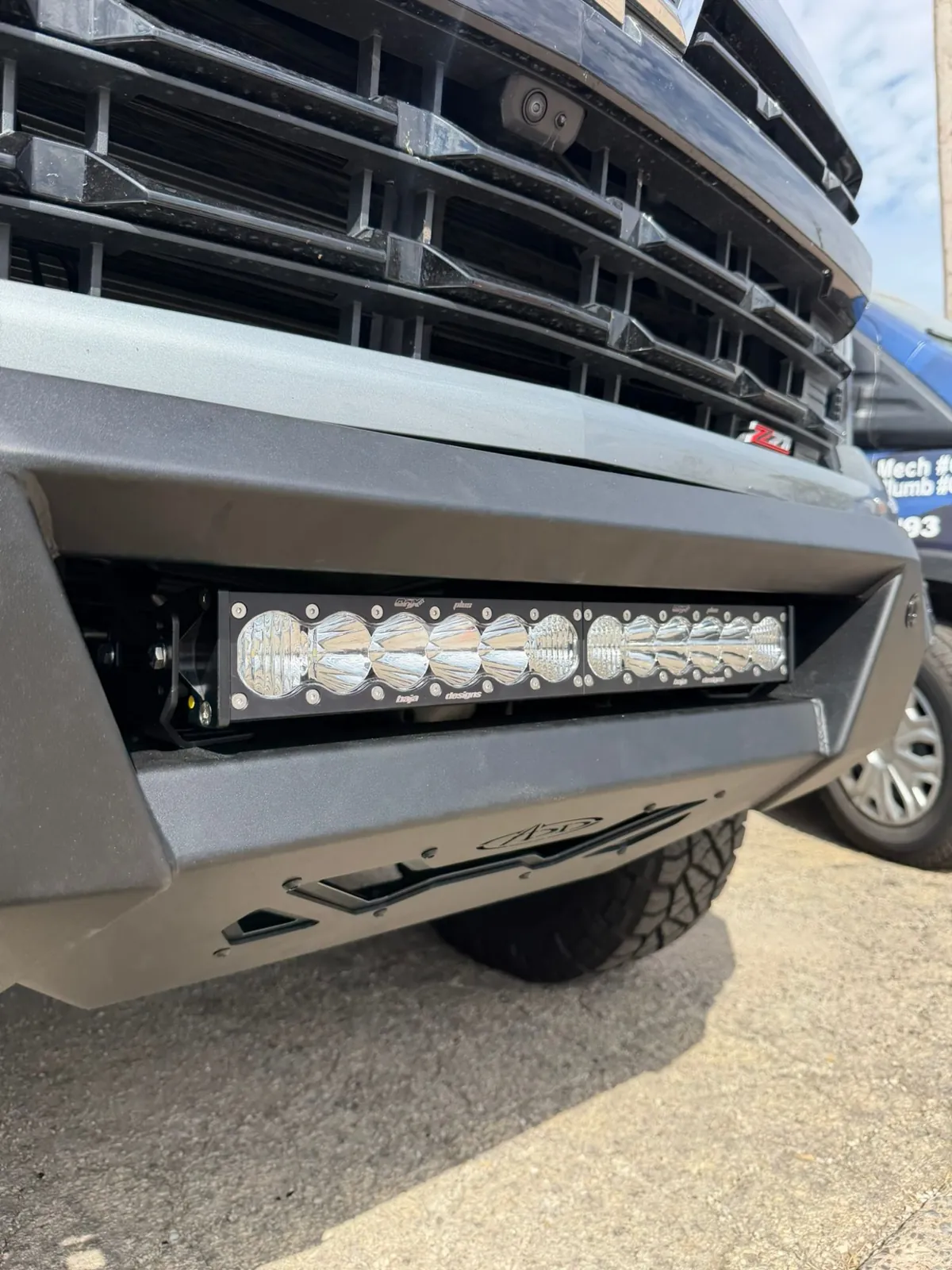
A Baja Designs OnX6+ light bar tucked into an aftermarket bumper on a Silverado. Look close at the optics: different reflector shapes in one bar, so one light covers distance and spread.
DOT, SAE and Street Legal
SAE stands for the Society of Automotive Engineers. They write the tests that say how a vehicle light should perform: how bright, how wide, and where the beam is allowed to go so it does not blind the other driver. DOT is the federal rule that requires lights used on the road to meet those standards.
A light marked SAE F has been tested as a front fog lamp. That is the kind of light built to run on the street in bad weather. Both Baja Designs and Rigid Industries make SAE fog versions of some of their pods.
A light marked off-road only, or with no marking at all, has not been tested for road use. That does not make it a bad light. It means it is meant for the trail, the field, or the ranch, not for oncoming traffic. Every state, Oklahoma included, sets rules for auxiliary lights on public roads. The simple rule: if it is off-road only, it stays off around other cars.
Where You Mount It Changes Everything
Bumper
Low on the bumper is the best spot for fog and wide patterns. The light sits under dust and fog, so less of it bounces back. It also stays out of your line of sight, so there is no glare off the hood.
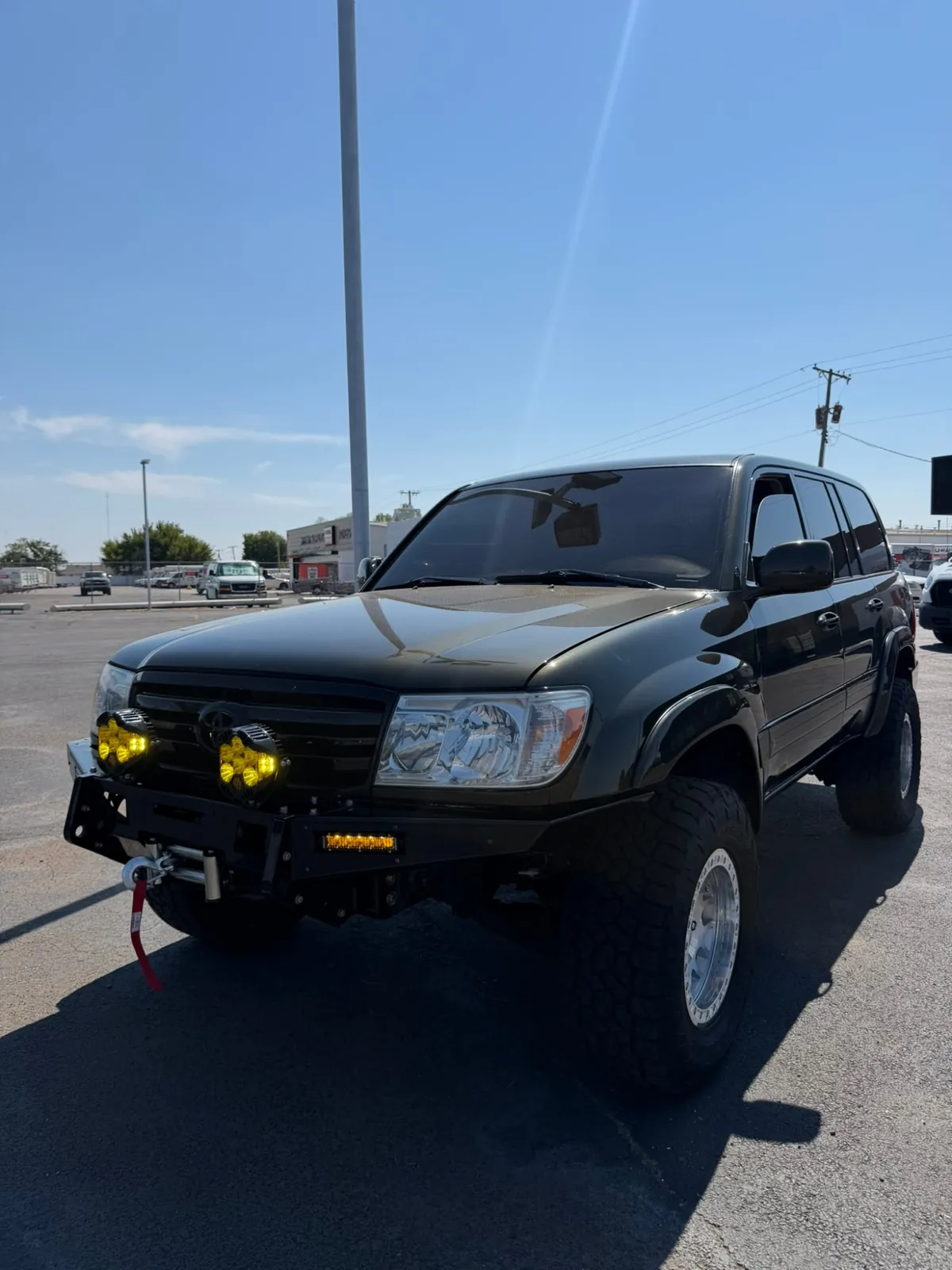
This Land Cruiser runs amber pods up top on the bumper and a small amber bar down low. Two heights, two jobs, one clean bumper.
Behind the grille
A light bar mounted behind the grille gives you real light with a factory look. Lights off, most people never notice it is there.
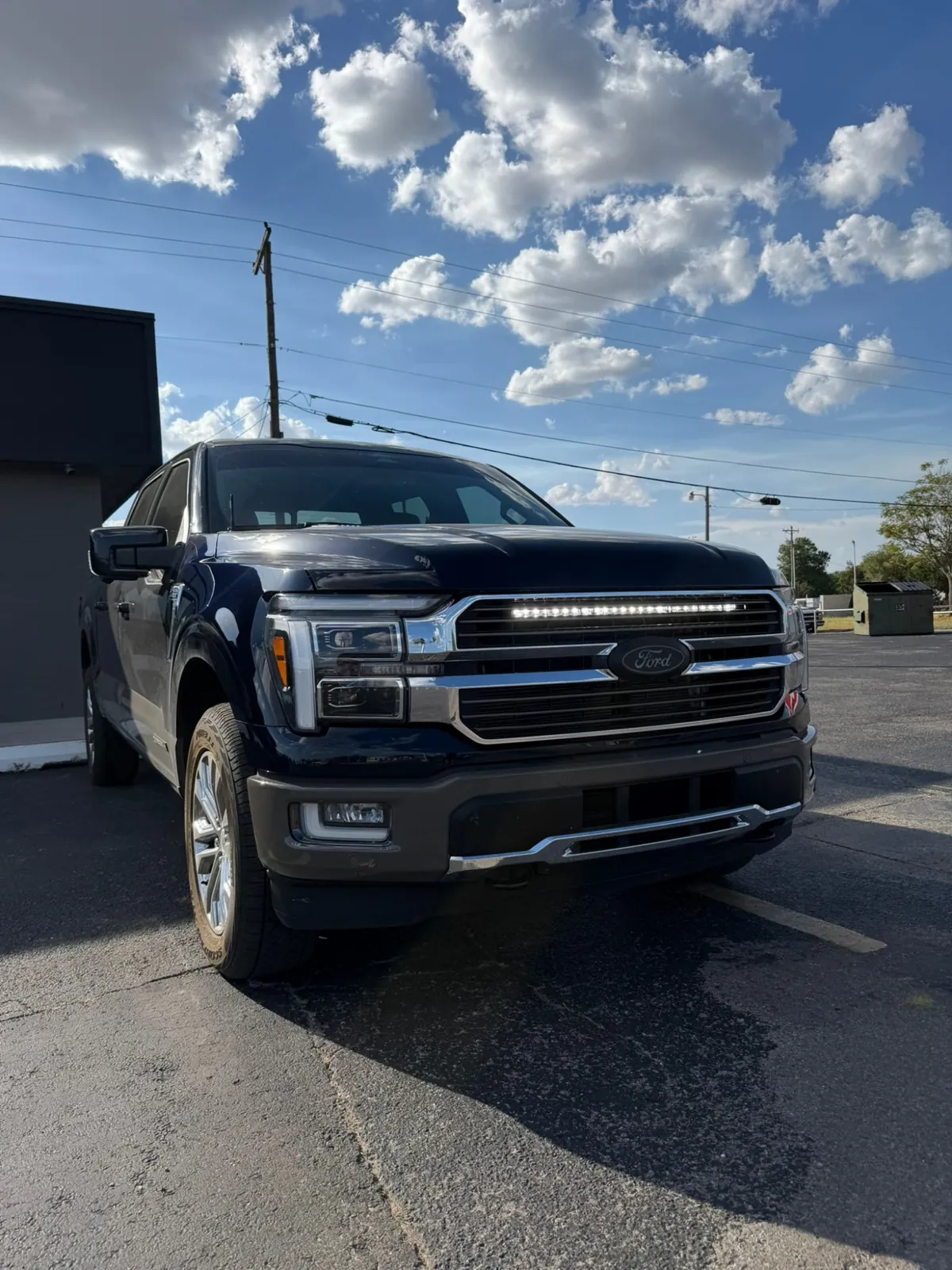
A-pillar and ditch lights
Small pods at the base of the windshield light up the sides of the road and the inside of a turn. That is where deer stand and where trails bend. Factory headlights do almost nothing there.
Roof
A roof bar throws light the farthest, but it also lights up your hood and anything in the air right in front of the windshield. On a dusty road that can glare worse than no light at all. A roof bar is for wide open country, not everyday driving.
Switch Panels: Control, Not a Rat's Nest
Every light needs power, a fuse, a relay, and a switch. Add four or five sets of lights with cheap switches drilled into the dash and you get a mess under the hood and a dash that looks like an airplane.
A switch panel puts every light, plus things like an air compressor or rock lights, on one clean controller. Each circuit gets its own fuse and relay in one box under the hood, and one small keypad inside the cab runs it all. Panels from brands like sPOD and Switch-Pros let you set lights to come on with high beams, set brightness, and add more circuits later without tearing into the truck again.
Baja Designs, Rigid Industries, and the Amazon Lights
We install a lot of Baja Designs and Rigid Industries. Both build their lights to last in rain, mud and pressure washers, both offer real beam pattern choices, and both back what they sell. Baja is known for its Squadron and S2 pods, LP series round lights, and OnX6+ bars. Rigid is known for its D-Series pods and SR-Series and 360-Series lights.
The cheap online lights look the same in a photo. The difference shows up later: water inside the lens after the first car wash, LEDs that dim when they get hot, and radio static from cheap electronics inside. You end up buying lights twice and paying for the install twice.
Off-Road Lighting FAQ
Is amber or white better for off-road lights?
Neither wins everywhere. Amber cuts glare in fog, rain, dust and snow, and it is easier on your eyes over a long night. White shows more detail and true color on a clear night. Most of our builds run amber low on the bumper and white for distance, or pods with both.
Should I get spot or flood lights?
Spot throws a narrow beam far down the road or trail. Flood spreads light wide and close. A light bar or pods in a combo pattern give you some of both. For a truck that sees highway miles and trails, we usually pair a spot or driving beam with a wide or fog beam.
Are off-road lights street legal in Oklahoma?
Most off-road lights are not meant to be used on public roads around other traffic. Lights built to SAE standards, like an SAE fog lamp, are made for road use within your state's rules. Anything labeled off-road only should stay off around other cars. We wire lights so they are easy to shut off and can be tied to your high beams.
What is the difference between DOT and SAE on a light?
SAE writes the test standards for how a vehicle light should perform. DOT is the federal rule that requires road lights to meet those standards. A light marked SAE F is tested as a front fog lamp. A light with no marking, or marked off-road only, has not been tested for road use.
Do you install Baja Designs and Rigid Industries lights?
Yes. We install both, plus switch panels, relays and harnesses. Bring us your truck and how you use it, and we will spec the lights, the beam patterns and where they mount.
Get Lit in Edmond
We are at 909 S. Broadway in Edmond and light trucks for drivers across Edmond, OKC, and the metro. Tell us what you drive, where you drive it, and what you can not see right now. We will spec the color, the beam, the mounting spot and the wiring, and install it clean. Call us at (405) 471-1302 or start a quote online.